The project

Why Vespri

The name, the reason it exists, how it sustains itself financially, where it sits relative to the rest of the research landscape on labour and industry — and who runs it.

§ 01 — The name

Vespri, and "Research and Reaction"

Vespri takes its name from a historic event of strong reaction, and looks at the present with the same spirit: it observes how companies and governments interact, and the consequences that follow — on the financial front, in the strategies that gradually take shape and, step by step, end up writing history.

The tagline, "Ricerca e Reazione" ("Research and Reaction"), describes the two-phase method. Research is the collection and verification of data: stated sources, explicit limits, no shortcuts. Reaction is what that discipline allows you to read — how a company or a government responds to an event, what financial consequences follow, what strategies emerge from that response and, over time, help determine the trajectory of an entire sector.

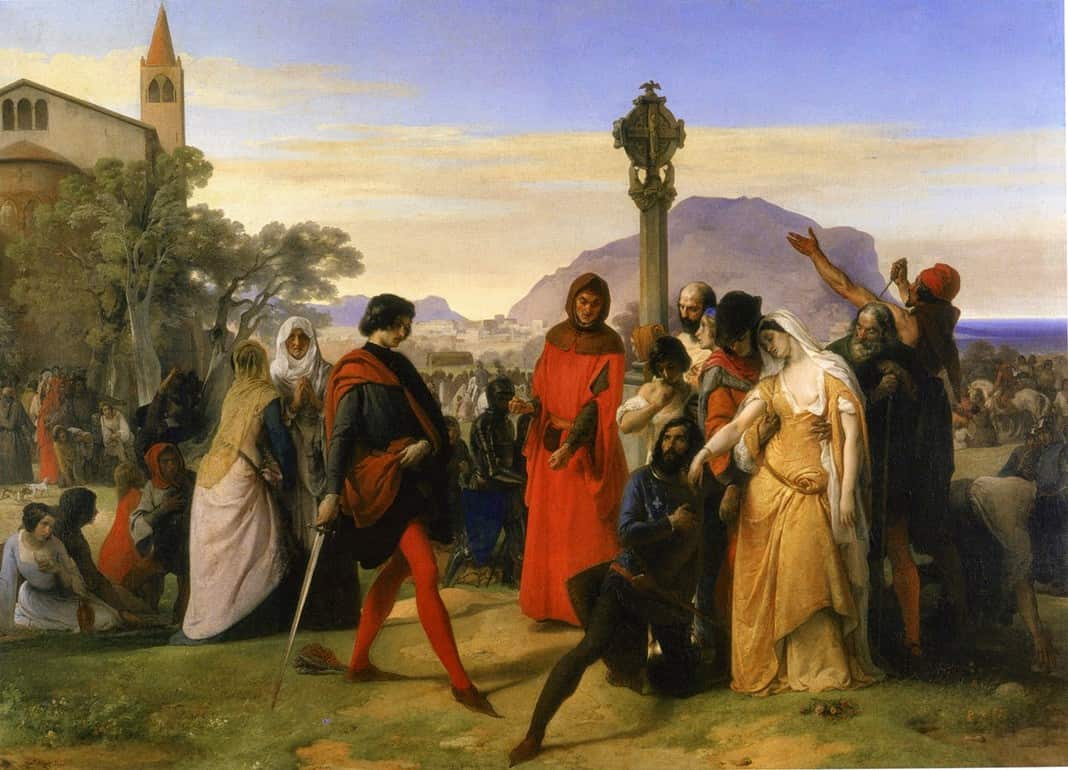
The name recalls the Sicilian Vespers of 1282: the uprising with which the Sicilian people rose against Angevin rule, ending a government imposed from afar. It has remained, in Sicilian memory, the symbol of a people that does not passively submit but reacts.

§ 02 — The motivations

Reading the sector the way you read a balance sheet

Vespri was created to support those who need to make strategic decisions in the engineering sector, without geographic boundaries. It does so by combining financial data, concrete case studies and constant monitoring of market trends — but also of what happens in the world beyond the companies themselves, because that is often where the pressures that shape their fate come from.

Proprietary datasets — public institutional monitoring for employment restructuring, public company financial statement data for margins and leverage, job-posting aggregators and recruiting portals with accredited data access for skills demand — read with the same stated methodology report after report, with caveats on limits always explicit in the body of the text, never relegated to a footnote nobody reads.

§ 03 — The model

Three tiers, openly stated

A business model that describes itself without ambiguity is consistent with the same promise of methodological transparency that applies to the data.

01 — Open

Datasets and editorial reports

Open-source analysis on employment, margins and skills, published in full with method and limits in plain view. It is the foundation of trust: before asking someone to pay for a deep dive, they must be able to verify for free how a number is built.

02 — Reserved (Coming soon)

Specialist reports

For those who need depth on a single sector, country or company beyond what the free editorial covers — same methodological standard, greater granularity, full dataset.

03 — On request

Advisory

For those who need to turn analysis into a decision — supplier-chain exposure, sector repositioning, a recurring monitoring program — with the same rigor, applied to the specific case.

§ 04 — Positioning

Where Vespri sits

Four defining traits.

01

Vertical

Vespri segments engineering into seven operating sectors — a methodological choice, not a standard taxonomy — and covers them in depth, rather than spreading coverage across a wider range of topics. A defined scope, read thoroughly.

02

Quantitative

Vespri starts from structural data — employment, financials, skills — and uses geopolitical context to explain it, not the other way around. The reading of events is always anchored to a verifiable number, not just to who has an interest in what.

03

Independent

Vespri operates at independent scale, based in Italy, following the data wherever it leads — Europe, the United States, Asia — without geographic boundaries fixed in advance by organizational structure.

04

Dual-track

Vespri keeps separate two functions that elsewhere tend to intertwine into a single funding source: free editorial on one side, paid advisory on proprietary data on the other. Two distinct tracks, so that one does not steer the other.

§ 05 — Who's behind it

Who runs the project

Vespri is conceived and run by Michele Casella, who has worked for years in an engineering research and development setting in the automotive and industrial sectors, with a background spanning economics and data analysis: a degree in Economics and Finance from the Università degli Studi di Palermo, an Erasmus exchange in International Economics and Public Policy at Johannes Gutenberg Universität in Mainz, and a master's in Economics and Data Analysis from the Università degli Studi di Verona, with coursework in time series, machine learning and econometrics.

The role covers business case development, tracking of project progress and related cash flows, high-level reporting — from a single business unit to global company scale — and building custom Python applications to automate otherwise manual analytical processes. It's the same toolkit applied here to the seven engineering sectors: data collection, structured monitoring, communicating results to decision-makers. Earlier experience on the sales side added a specific grounding in reading commercial trends in the industrial vehicles segment.

Full professional profile on LinkedIn. The code for the data collection and processing projects is public on GitHub.
Questions about the project, before reading the reports

Method, sources and model are designed to hold up to the most direct question: what the reliability of these numbers is based on.